
Feed Turf Based on Growth Cycles
Fertilizers in Washington for lawns and fields that need consistent nutrient replenishment through seasonal transitions
Nitrogen drives blade growth and green color, phosphorus strengthens root development, and potassium helps turf withstand drought and disease pressure. GreenKing Turf stocks granular and liquid fertilizers formulated with varying N-P-K ratios to match whether your property needs rapid greening, root establishment, or stress tolerance heading into winter. Applying the wrong nutrient balance at the wrong time wastes product and creates surge growth that weakens turf or runoff that contaminates waterways.
Slow-release formulas break down over six to twelve weeks, feeding turf gradually without causing excessive top growth that requires frequent mowing, while quick-release options deliver nitrogen within days for fast color correction before events. Granular products work well for large areas because broadcast spreaders provide even coverage, but liquid formulas penetrate faster and suit smaller lawns or targeted applications where precision matters. Seasonal timing in Washington follows a spring application focused on nitrogen for growth, a summer feeding with balanced nutrients to sustain health, and a fall treatment emphasizing potassium to harden turf before freezing temperatures arrive.
Arrange an on-site evaluation to identify current nutrient deficiencies and map out a fertilization schedule aligned with your turf's growth stage.
Why Regular Fertilization Prevents Decline
Turf removes nutrients from soil every time you mow and bag clippings, and rain leaches nitrogen and potassium deeper into the profile where roots can't reach them. Without regular fertilization, grass thins, color fades to yellow-green, and weeds colonize bare spots because desirable species lack the energy to compete. Application methods matter—spreader settings control how much product hits the ground per pass, and overlapping or skipping sections creates striping where some areas grow thick while others stay sparse.
After fertilization, blades darken within five to ten days as nitrogen activates chlorophyll production, and root systems expand over the following weeks as phosphorus supports cell division below ground. Turf feels denser underfoot because individual plants produce more tillers—the side shoots that thicken a lawn—and gaps between plants close as growth accelerates. You'll also notice fewer weeds because healthy turf outcompetes opportunistic species for sunlight and soil space.
Environmental considerations include avoiding applications before heavy rain, which washes nutrients into storm drains, and keeping spreaders calibrated to prevent over-application that burns turf or contributes to algae blooms in nearby water bodies. Safe usage also means storing product in sealed containers away from moisture and following label rates instead of guessing quantities. High-quality fertilizers include micronutrients like iron and sulfur that support enzyme function and color intensity beyond what basic N-P-K blends provide.
Answers to Frequent Service Questions
Customers in Washington typically ask about application timing, product selection, and results before starting a fertilization program.
What does the N-P-K ratio on a fertilizer bag mean?
The three numbers represent the percentage by weight of nitrogen, phosphorus, and potassium—so a 20-5-10 blend contains twenty percent nitrogen, five percent phosphorus, and ten percent potassium, with the remainder being inert carrier material.
How often should you fertilize a lawn in Iowa?
Cool-season turf benefits from three to four applications per year—early spring, late spring, late summer, and fall—while warm-season grasses need feeding from late spring through summer when actively growing.
What is the difference between granular and liquid fertilizer?
Granular products release nutrients slowly as water dissolves particles over weeks, while liquid formulas absorb through blades within hours for rapid greening but require more frequent reapplication.
Why does grass turn yellow even after fertilizing?
Yellowing despite fertilization often indicates nitrogen leaching from sandy soil, compacted ground preventing root uptake, or iron deficiency in high-pH soils common in parts of Iowa.
How do you avoid burning turf with fertilizer?
Apply product when grass is dry but water it in immediately after spreading, follow label rates without exceeding recommended amounts, and avoid fertilizing during heat waves when turf is already stressed.
GreenKing Turf offers product recommendations based on soil test results and turf type, along with equipment guidance for accurate spreading. Contact us to develop a fertilization plan that matches your property's nutrient needs and application equipment.
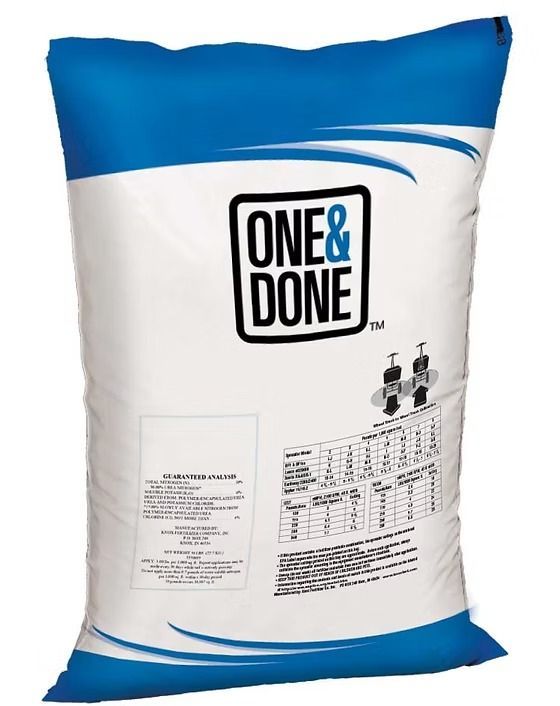
One and Done
- Season-long fertilizer, weed and insect control for sports turf managers.
- One early shot of Shaw’s Turf Food with Acelepryn® and Dimension® takes care of Crabgrass and grubs for the entire season.
- The advanced controlled release properties of SurfCote and XRT give sports turf managers the flexibility to address increasing regulations that restrict fertilizer and pesticide applications while schools are in session and/ or require advance notification of parents.
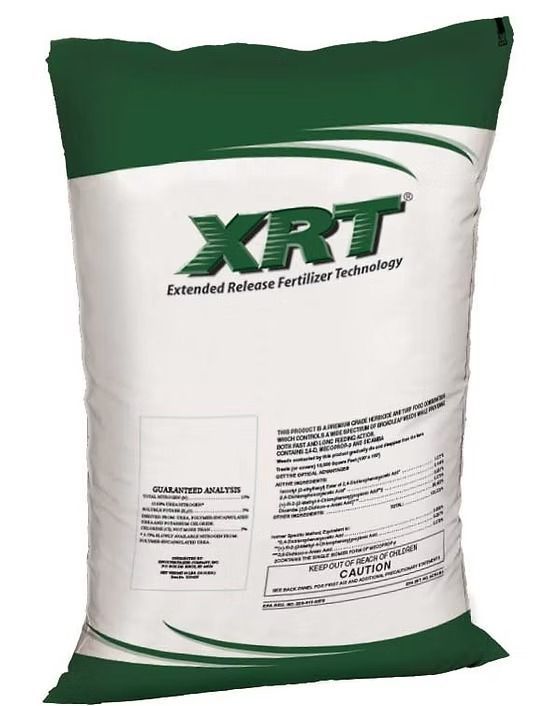
XRT
- XRT is an innovative and patented polymer resin that provides a temperature-dependent nutrient release for fertilizer granules.
- As temperatures warm, nutrients are released at a consistent rate, to match the demand of the turf.
- After complete release, the polymer decomposes into naturally occurring compounds.
- By extending nutrient release by up to 90 days, XRT helps plants achieve their full potential for growth and vigor.
- It keeps turf — and even specialty crops — healthy, lush and green, all season long.
Uflexx
- UFLEXX® is a worthy competitor to sulfur-coated ureas as it is more efficient and more versatile.
- UFLEXX® provides protection against nitrogen loss due to volatilization and leaching.
- FLEXX® is also used as a nitrogen component in blended fertilizers and as a soluble nitrogen source for use in liquid applications.
Gro-Guard
- Gro-Gard is a proprietary blend of two bioactive amino acids and cofactors that activates two key plant amino acids that help regulate nutrient uptake and movement within the plant.
- With greater nutrient availability, plants can achieve their full genetic potential for growth and vigor.
- With Gro-Gard, roots grow deeper and with greater mass, delivering a healthier, lusher and greener course all season long. Your turf is protected, even during the peak golf season, because nutrient delivery is enhanced during the entire season.